The 2026 identity infrastructure shift
On-chain identity in 2026 has moved past the experimental phase, establishing itself as a regulated, enterprise-grade infrastructure layer. Driven by self-sovereign identity (SSI) and verifiable credentials, this shift is anchored in regulatory mandates and the urgent need for secure, privacy-preserving digital onboarding rather than crypto speculation.
The market reflects this maturity. Industry data indicates the decentralized identity market reached $7.4 billion in 2026. This growth is anchored by concrete regulatory requirements, such as the European Union’s mandate for every member state to deploy a digital identity wallet by year-end. Governments and enterprises are no longer testing these systems; they are deploying them as critical utility.
This infrastructure layer provides the foundation for streamlined corporate onboarding. By leveraging SSI, companies can verify user credentials without storing sensitive personal data, reducing liability and improving security. The focus has shifted from building isolated identity silos to creating interoperable, verifiable networks that meet global compliance standards. As adoption widens, on-chain identity becomes the standard for digital trust.
SSI protocols and verifiable credentials
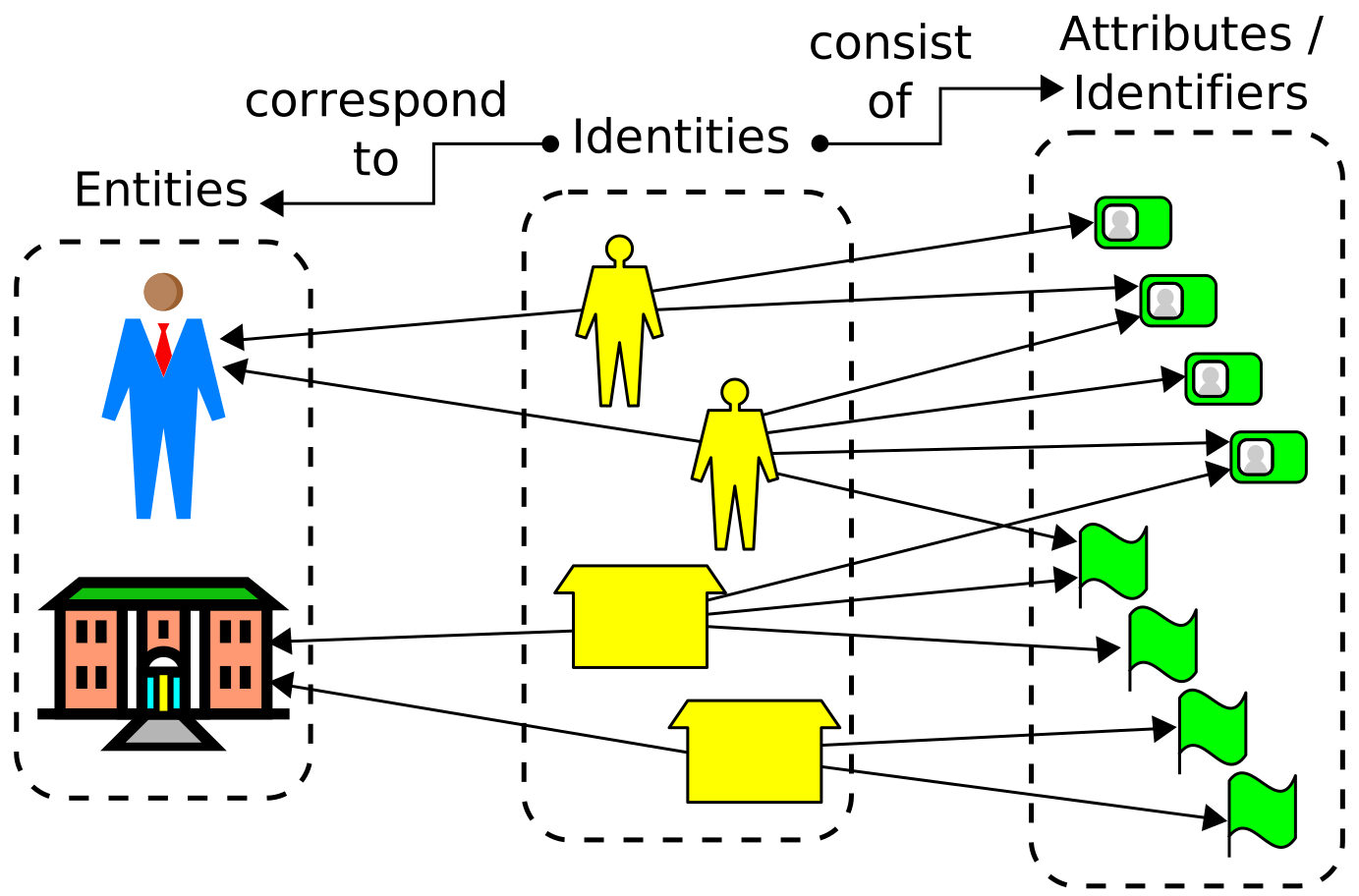
Self-sovereign identity (SSI) relies on a trust model where users hold their own credentials in digital wallets rather than relying on centralized databases. This architecture shifts control from institutions to individuals, allowing people to manage their digital reputation without exposing sensitive data to a single point of failure. The core mechanism involves issuing verifiable credentials (VCs) that link real-world attributes to a blockchain address using cryptographic proofs.
When a user receives a credential, it is signed by the issuer but stored locally. To prove an attribute—such as age or citizenship—the user generates a zero-knowledge proof or presents a signed credential directly to a verifier. This process ensures that only the minimum necessary information is shared, preserving privacy while maintaining trust. The blockchain serves primarily as a decentralized ledger for verifying the status of these credentials, such as checking for revocation, rather than storing the personal data itself.

Several protocols have emerged to standardize this exchange. W3C Verifiable Credentials provide a foundational data model, while Decentralized Identifiers (DIDs) offer a method to create and control unique, persistent identifiers. On-chain implementations like the Solana Attestation Service attach signed, verifiable claims directly to wallet addresses, streamlining identity and compliance use cases for developers building on-chain applications.
Why 2026 Is the Inflection Point for On-Chain Identity 2026
The enterprise adoption of on-chain identity 2026 is no longer a speculative future; it is a compliance necessity. Two converging forces are driving this shift: strict regulatory mandates and the urgent need for corporate onboarding efficiency. By 2026, decentralized identity solutions are projected to hit a $7.4 billion market size, fueled by the European Union's requirement for every member state to deploy digital identity wallets by year-end [[src-serp-7]].
For global enterprises, this regulatory pressure translates into immediate operational changes. The EU digital identity wallet framework forces companies to adapt their customer verification processes. Rather than relying on fragmented, paper-based KYC checks, businesses are turning to verifiable credentials that allow users to prove their identity without exposing unnecessary personal data. This shift reduces fraud risk while accelerating account activation.
Beyond compliance, the efficiency gains are substantial. Onchain digital identity products are streamlining onboarding by giving users control over their data and providing companies with cryptographically verified proofs [[src-serp-2]]. This reduces the time and cost associated with manual verification, a critical advantage in a competitive financial and healthcare landscape.
The table below compares the primary drivers behind this enterprise adoption, highlighting how regulatory pressure intersects with operational efficiency.
| Adoption Driver | Enterprise Impact | Key Milestone |
|---|---|---|
| EU Digital Identity Wallet | Mandatory compliance for all EU member states | Year-end 2026 |
| Onboarding Efficiency | Reduced fraud and faster customer activation | Immediate ROI |
| Market Growth | Decentralized identity market reaches $7.4B | 2026 Projection |
Top on-chain identity verification platforms
The on-chain identity landscape in 2026 has shifted from experimental prototypes to production-grade infrastructure. Platforms now compete on three measurable axes: regulatory compliance, user experience friction, and technical scalability. Selecting the right provider depends on whether the priority is enterprise-grade KYC, developer-friendly abstraction, or decentralized proof-of-personhood.
Worldcoin
Worldcoin focuses on proof-of-personhood through biometric verification. Its Orb hardware captures iris scans to issue unique human identifiers, creating a global identity layer that prevents sybil attacks. This approach is particularly valuable for airdrop distribution and governance systems requiring human-only participation. However, the reliance on physical hardware and biometric data raises significant privacy concerns and limits adoption in regions with strict data protection laws like the EU.
Privy
Privy has positioned itself as the standard for wallet abstraction and authentication. By integrating seamlessly with existing wallets and enabling social login flows, Privy dramatically reduces onboarding friction. Its compliance tools allow developers to enforce KYC/AML checks without breaking the user experience. Privy is ideal for applications prioritizing mass adoption, as it handles the complex backend identity verification while presenting a simple interface to the end user.
Dynamic
Dynamic offers a comprehensive authentication infrastructure tailored for Web3 applications. It provides robust session management, multi-factor authentication, and modular identity components. Dynamic’s strength lies in its flexibility for developers who need to customize the auth flow while maintaining security standards. It supports a wide range of wallets and social logins, making it a strong choice for platforms that require granular control over user identity and access management.
Solana Attestation Service
The Solana Attestation Service provides a decentralized credential system on the Solana blockchain. It allows issuers to attach signed, verifiable claims directly to wallet addresses, enabling trustless verification of identity attributes. This model is suited for decentralized applications that require on-chain verifiable credentials without relying on centralized databases. It emphasizes privacy and user sovereignty, allowing individuals to control which identity proofs are shared with applications.
| Platform | Primary Focus | Compliance Level | UX Friction | Best Use Case |
|---|---|---|---|---|
| Worldcoin | Proof-of-Personhood | High (Biometric) | High | Sybil-resistant governance |
| Privy | Wallet Abstraction | Integrated KYC | Low | Mass adoption apps |
| Dynamic | Auth Infrastructure | Modular MFA | Low | Custom Web3 dashboards |
| Solana Attestation | On-Chain Credentials | Decentralized | Medium | DeFi and DAOs |
Digital ownership trends and future outlook
On-chain identity 2026 marks a shift from speculative asset holding to functional digital sovereignty. The market is moving beyond simple wallet addresses toward Self-Sovereign Identity (SSI) frameworks, where users hold verifiable credentials rather than relying on centralized logins. This transition redefines digital ownership by making identity portable, programmable, and directly controlled by the user.
Smart wallets have emerged as the foundational layer for this change. Unlike traditional accounts, smart wallets act as unified on-chain identities governed by programmable contracts. This architecture enables gasless transactions, social recovery mechanisms, and secure asset custody without exposing private keys to third-party custodians. As noted in infrastructure discussions from NFT.NYC 2026, these wallets are becoming the standard interface for interacting with decentralized applications.
The ecosystem is expanding rapidly, with tools like those cataloged by Alchemy reflecting over 78 distinct decentralized identity solutions in 2026. This proliferation indicates a maturing market where interoperability and user experience are prioritizing utility over novelty. For developers and users, the focus is now on selecting protocols that support seamless credential verification across different chains and applications.
Market analysis suggests that the next cycle of Web3 identity protocols will be defined by regulatory compliance and enterprise adoption. As legal frameworks for digital assets clarify, identity solutions that offer robust proof-of-personhood and compliance features will likely dominate. The trend is toward invisible infrastructure: identity verification that happens in the background, allowing users to own their data without friction.
Frequently asked questions on SSI
What is onchain identity verification? Onchain identity verification links real-world identity attributes or digital reputation to a blockchain address using cryptographic proofs. This process allows users to prove specific claims, such as age or residency, without revealing the underlying personal data to the service provider.
Is decentralized identity adoption accelerating in 2026? Yes. The decentralized identity market is projected to hit $7.4 billion in 2026. Regulatory pressure is a primary driver; every EU member state must deploy a digital identity wallet by year-end, forcing rapid integration of SSI standards into public and private sector services.
How does SSI differ from traditional login methods? Traditional logins rely on centralized databases that create single points of failure for data breaches. SSI shifts control to the user, who holds credentials in a self-sovereign wallet and shares only the necessary proof via zero-knowledge proofs, minimizing exposure of sensitive information.
No comments yet. Be the first to share your thoughts!